What Can You Do with Virtual Reality: The Complete Guide to VR Activities
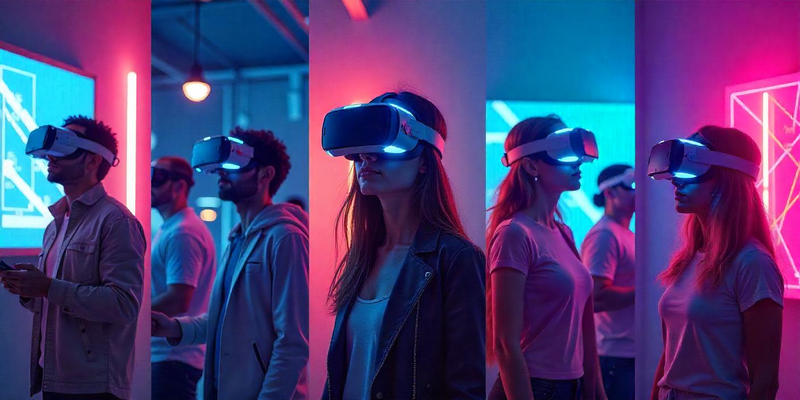
Virtual reality has evolved from science fiction fantasy to practical technology that's reshaping how we work, learn, and entertain ourselves. Whether you're a curious newcomer wondering about VR activities or a professional seeking to implement virtual reality in your industry, this guide reveals the extensive possibilities that await in virtual worlds.
Gaming and Entertainment: Where VR Activities Began
Gaming remains the most popular entry point for VR activities, offering experiences that traditional gaming simply cannot match. Modern VR games transport players into fully realized worlds where physical movement controls the action. From sword fighting in medieval dungeons to piloting spacecraft through asteroid fields, VR gaming creates genuine presence that makes every victory feel earned and every defeat feel real.
Beyond traditional gaming, virtual reality entertainment has expanded into social experiences where friends can meet in digital spaces regardless of physical distance. Virtual concerts allow audiences to experience live performances from impossible perspectives, while VR movie theaters create shared viewing experiences that surpass traditional cinema.
Virtual reality arcades have democratized access to high-end VR experiences, letting people try advanced equipment before making personal investments. These spaces often feature room-scale tracking systems that allow full-body movement within virtual environments, creating the ultimate playground for VR activities.
Virtual Reality Filmmaking: Revolutionizing Storytelling
Virtual reality filmmaking represents one of the most exciting frontiers in VR activities. Filmmakers now create 360-degree narratives that place viewers at the center of the story rather than as passive observers. This immersive storytelling technique requires entirely new approaches to directing, cinematography, and editing.
Directors working in VR production must consider that audiences can look anywhere at any time, making traditional shot composition obsolete. Instead, they guide attention through spatial audio, lighting, and movement within the virtual space. This creates intimate storytelling experiences where viewers feel like active participants rather than distant observers.
Documentary filmmakers have embraced virtual reality to create empathy-driven experiences that let viewers walk in someone else's shoes. From refugee camps to historical events, VR documentaries create emotional connections that traditional media cannot achieve. These projects demonstrate how VR activities can serve social causes and educational purposes.
Professional VR Production and Industry Applications
VR production has matured into a sophisticated industry serving multiple sectors. Architecture firms use virtual reality to let clients walk through buildings before construction begins, saving time and money while ensuring client satisfaction. Interior designers create virtual showrooms where customers can experiment with different layouts and materials in real-time.
Medical professionals use VR activities for surgical training, allowing students to practice complex procedures without risk to patients. These simulations provide repeatable training scenarios that help build expertise faster than traditional methods. Mental health therapists employ VR for exposure therapy, helping patients confront phobias in controlled virtual environments.
Manufacturing companies implement VR for employee training, especially for dangerous or expensive equipment. Workers can learn proper procedures and safety protocols in virtual environments before handling real machinery. This approach reduces accidents and improves competency while lowering training costs.

VR LED Walls: Bridging Virtual and Physical Production
VR LED walls represent the cutting edge of production technology, combining virtual backgrounds with physical sets to create seamless environments. This technology allows actors to perform in realistic lighting conditions while interacting with virtual elements that respond in real-time to camera movements.
Major film studios have adopted VR LED walls for productions ranging from science fiction epics to intimate dramas. The technology eliminates the need for green screen compositing in many situations, allowing directors to see final results during filming rather than waiting for post-production. This immediate feedback accelerates decision-making and improves creative outcomes.
Television production benefits significantly from VR LED walls, especially for news broadcasts and talk shows. Virtual sets can be changed instantly without physical reconstruction, allowing programs to adapt their visual style to match content or seasonal themes. This flexibility reduces production costs while expanding creative possibilities.
Educational and Training Applications
Educational institutions have integrated VR activities into curricula across multiple disciplines. History students can visit ancient Rome or witness historical events firsthand. Science classes use virtual laboratories where students can conduct experiments impossible in physical classrooms due to safety or cost constraints.
Language learning through VR creates immersive environments where students practice conversation skills with virtual native speakers. These programs simulate real-world scenarios like ordering food in restaurants or asking for directions, building confidence before real-world interactions.
Corporate training programs utilize VR for soft skills development, leadership training, and customer service scenarios. Employees can practice difficult conversations or challenging situations in safe virtual environments where mistakes become learning opportunities rather than costly errors.
Health and Fitness Through Virtual Reality
Fitness enthusiasts have discovered that VR activities can make exercise more engaging and enjoyable. Virtual reality fitness programs disguise workouts as games, encouraging longer and more frequent exercise sessions. From boxing matches to dance competitions, VR fitness apps track movement and provide feedback while maintaining entertainment value.
Physical therapy patients use VR activities to improve mobility and coordination in engaging ways. Virtual environments can be adjusted to match patient capabilities while gradually increasing difficulty as recovery progresses. This gamification of rehabilitation improves patient compliance and accelerates recovery times.
Meditation and mindfulness applications transport users to peaceful virtual environments designed to reduce stress and promote relaxation. These programs often include guided meditation sessions in settings impossible to access in real life, from underwater coral reefs to mountaintop temples.

Social Connection and Virtual Communities
Virtual reality has created new forms of social interaction through shared virtual spaces. People attend virtual meetings, concerts, and social gatherings where geographic distance becomes irrelevant. These platforms enable rich social interactions through avatar-based communication that includes gesture and voice.
Virtual workspaces allow remote teams to collaborate in shared environments where they can manipulate 3D models, brainstorm on virtual whiteboards, and hold meetings that feel more natural than traditional video calls. This technology has become particularly valuable for distributed teams seeking better collaboration tools.
Virtual support groups and therapy sessions provide safe spaces for people dealing with various challenges. The anonymity possible through avatars can encourage more open communication while still maintaining human connection and empathy.
Creative and Artistic Expression
Artists have embraced VR as a new medium for creative expression, sculpting and painting in three-dimensional space with tools that respond to natural hand movements. Virtual art galleries showcase these works while allowing visitors to experience art from perspectives impossible in physical spaces.
Music producers create immersive audio experiences designed specifically for virtual environments. These compositions use spatial audio to create soundscapes that surround listeners and respond to their movements within virtual spaces.
Virtual fashion shows and design presentations allow creators to showcase work without physical limitations. Designers can create impossible garments and accessories that exist only in virtual worlds, pushing creative boundaries beyond physical constraints.

Conclusion
Virtual reality has transcended its early gaming origins to become a versatile technology platform supporting diverse VR activities across entertainment, education, healthcare, and professional applications. From virtual reality filmmaking that creates new storytelling possibilities to VR production techniques that revolutionize how content is created, virtual reality continues expanding into new domains.
The integration of VR LED walls in professional production demonstrates how virtual and physical worlds increasingly blend to create unprecedented creative possibilities. As hardware becomes more accessible and software more sophisticated, VR activities will continue evolving to serve new purposes and reach broader audiences.
Whether you're interested in entertainment, professional development, creative expression, or social connection, virtual reality offers tools and experiences that can enhance your goals. The key lies in identifying which VR activities align with your interests and taking that first step into virtual worlds that are limited only by imagination.
Frequently Asked Questions
What equipment do I need to start VR activities?
Entry-level VR activities require a compatible smartphone and cardboard viewer, costing under $50. Mid-range experiences need dedicated headsets like Oculus Quest or PlayStation VR, ranging from $300-500. High-end VR activities require PC-connected headsets and powerful computers, with total costs reaching $1,500-3,000.
Are VR activities safe for children?
Most VR headset manufacturers recommend ages 13 and older due to potential eye strain and balance issues. Supervised short sessions may be appropriate for younger children, but parents should consult eye care professionals and limit exposure time. Always ensure adequate play space to prevent physical injuries.
How long can I safely engage in VR activities?
Begin with 15-30 minute sessions and gradually increase duration as you adapt. Most people can comfortably engage in VR activities for 1-2 hours with breaks. Stop immediately if you experience motion sickness, eye strain, or disorientation. Take regular breaks to rest your eyes and regain spatial awareness.
What's the difference between VR production and traditional film production?
VR production creates 360-degree content where viewers control their perspective, while traditional production uses fixed camera angles. VR production requires specialized cameras, different storytelling techniques, and post-production workflows designed for immersive content. The viewer becomes an active participant rather than a passive observer.
Can VR activities help with real-world skills?
Yes, many VR activities translate directly to real-world improvements. Flight simulators train pilots, medical VR teaches surgical techniques, and language learning apps improve communication skills. VR fitness programs increase physical activity, while social VR can improve confidence in interpersonal interactions.
What career opportunities exist in VR activities and production?
VR careers include content developers, 3D artists, UX designers, software engineers, and project managers. Virtual reality filmmaking needs directors, cinematographers, and editors with VR expertise. VR production companies seek technical artists, sound designers, and quality assurance specialists. Educational sectors need VR curriculum developers and trainers.