Photorealism in Virtual Sets: The Future of Virtual Filmmaking

The film production world is evolving faster than ever. Directors, cinematographers, and studios now demand real-world accuracy inside fully digital environments. This shift has made Photorealism in Virtual Sets one of the most influential innovations in virtual filmmaking.
Today, virtual studios are no longer limited to stylized or animated backdrops — they now replicate real lighting, textures, depth, and environment physics so accurately that most viewers can’t tell the difference between a digital set and a physical location.
From Hollywood blockbusters to brand commercials and live broadcasts, photorealistic virtual sets are reshaping how stories are created, produced, and delivered. Companies like ARwall, pioneers in real-time virtual production, are leading this transformation with cutting-edge LED stages and AR-powered virtual environments.
This blog explores how photorealistic virtual sets work, their price considerations, how they integrate into virtual filmmaking, and why 3D virtual studios are becoming the new norm for film production.
What Is Photorealism in Virtual Sets?
Photorealism in virtual sets refers to digital environments that mimic real-world appearance with extremely high accuracy. These sets simulate:
-
Real-to-life lighting and reflections
-
True-to-scale geometry
-
Natural shadows
-
High-resolution textures
-
Environmental depth and parallax
-
Real-world camera behavior
When integrated with LED volumes or real-time engines like Unreal Engine, these virtual sets allow filmmakers to shoot scenes that look indistinguishable from on-location footage.
Why Photorealism Matters in Virtual Filmmaking
Traditional green screen workflows often created lighting inconsistencies and artificial-looking compositing. Photorealistic virtual sets eliminate these issues by:
-
Allowing real-time interactive lighting
-
Providing accurate reflections on actors and props
-
Matching lens behavior inside the virtual world
This leads to:
-
Higher realism
-
Fewer post-production hours
-
More natural performances
-
Massive cost savings
Through companies like ARwall, LED volume stages blend physical and virtual worlds seamlessly — making photorealistic environments accessible even to mid-sized studios.
How Virtual Sets Work: Behind the Technology
Understanding how a virtual set works is essential for appreciating the value of photorealism. Modern virtual studio pipelines use three major components:
1. Real-Time 3D Engines
The backbone is a high-performance 3D engine like:
-
Unreal Engine
-
Unity
-
ARFX by ARwall
These engines generate detailed virtual environments that respond dynamically to:
-
Camera movements
-
Actor positioning
-
Lighting adjustments
Real-time rendering allows filmmakers to preview the final shot as they shoot.
2. LED Volume or Green Screen Stage
There are two types of virtual studios:
LED Volume Stage
Massive LED walls and ceilings display the virtual environment around the actors. These LED displays emit natural light and reflections, delivering unmatched realism.
ARwall’s LED virtual production systems reduce the need for complex tracking hardware and deliver AR-powered parallax for true spatial depth.
Green Screen Virtual Studio
Instead of LEDs, a green background is replaced digitally in real-time through compositing. This method is more affordable, but lacks the physical light interaction of LED volumes.

3. Camera Tracking Systems
Camera tracking ensures that as the camera moves, the virtual background shifts with correct perspective — creating the illusion of depth and realism.
Tracking solutions include:
-
Optical tracking
-
Marker-based tracking
-
Markerless ARwall ARFX tracking
-
Mechanical encoders
Without tracking, virtual sets look flat and fake.
Why Photorealism Is Essential for Modern Virtual Studios
Realism Drives Believability
The audience must accept that what they see is part of the story world. Photorealistic textures, proper lighting, and correct environmental behavior make that possible.
Better Actor Immersion
When actors can see and interact with the digital world (especially in LED volumes), their performance becomes more grounded and natural.
Fewer Fixes in Post-Production
Since the footage already contains correct reflections, shadows, and lighting, post-production work is minimal compared to traditional VFX workflows.
Consistency Across Shots
Virtual sets ensure:
-
identical lighting
-
accurate shadows
-
uniform visual quality
This is particularly useful for long-form productions.
Photorealistic Virtual Set Price: What Determines the Cost?
The photorealistic virtual set price varies based on several factors. Here is a comprehensive breakdown:
1. LED Volume vs. Green Screen
-
LED Volume (High-end):
$300,000 – $1M+ for a permanent setup
$5,000 – $50,000 per day for rentals -
Green Screen Virtual Sets (Budget-friendly):
$10,000 – $75,000 for a professional setup
$500 – $5,000 per day for rentals
2. 3D Environment Complexity
Photorealistic worlds require:
-
High-resolution textures
-
Complex lighting
-
Large geometry
-
Real-world physics behaviors
Price factors include:
-
Simple environment: $2,000 – $5,000
-
Medium complexity: $10,000 – $40,000
-
AAA-level realism: $50,000+
3. Tracking & Rendering Tools
Advanced tracking (optical or ARwall’s ARFX) increases the price depending on:
-
Scale of set
-
Number of cameras
-
Real-time rendering hardware
4. Virtual Production Crew
Skilled operators have a significant impact on the final look. Crew may include:
-
VP supervisor
-
LED engineer
-
Unreal Engine developer
-
Camera tracking technician
-
Lighting designer
Daily costs range from $1,000 – $8,000 depending on expertise.
3D Virtual Studio: The Backbone of Photorealistic Cinematic Production
A 3D virtual studio is the digital environment where all the photorealistic virtual set elements are created. It typically includes:
-
3D models
-
Lighting rigs
-
Virtual cameras
-
Textures and shaders
-
Weather systems
-
Depth and atmospheric effects
These studios help filmmakers:
-
Pre-visualize scenes
-
Explore camera angles
-
Experiment with lighting
-
Design entire worlds before filming begins
ARwall’s ARFX Studio tools allow filmmakers to build 3D virtual studios without requiring advanced 3D skills — making virtual production more accessible than ever.

Benefits of Photorealistic Virtual Sets in Film Production
1. Unlimited Creative Control
Directors can create worlds that would be impossible or too expensive to film in real life:
-
Futuristic cities
-
Alien planets
-
Historical periods
-
Large-scale landscapes
2. Massive Cost Reduction
Virtual sets eliminate:
-
Travel expenses
-
Location permits
-
Extensive set construction
-
Weather delays
3. Faster Shooting Schedules
Virtual studios allow multiple locations to be filmed:
-
In the same building
-
On the same day
-
Without resetting the set
4. Real-Time Visualization
Everything is visible during camera shooting, enabling immediate adjustments in:
-
Lighting
-
Time of day
-
Weather
-
Set design
5. Seamless Integration with Practical Props
Combining physical set pieces with photorealistic digital environments creates unmatched realism.
Advanced Applications of Photorealism in Virtual Filmmaking
Photorealistic virtual sets have moved far beyond background plates. Today, they serve as the core engine of virtual filmmaking, powering everything from Hollywood films to indie productions. They are widely used in:
1. Feature Films & High-End Productions
Major film productions use photorealistic virtual environments for:
-
Expensive location shots
-
Dangerous or inaccessible environments
-
Massive world-building
-
Fantasy and sci-fi settings
LED volume stages, especially those using ARwall’s ARFX technology, ensure real-world light interaction, solving the biggest limitation of green screens.
2. TV Series & Episodic Content
Virtual studios are ideal for TV workflows because:
-
The same environment can be reused
-
The lighting and assets remain consistent
-
Entire seasons can be filmed indoors
Shows requiring diverse locations benefit greatly from 3D virtual studio tools.
3. Commercials & Advertising
Brands use photorealistic virtual sets to:
-
Create multiple locations in a single day
-
Produce explainers with realistic product environments
-
Shoot commercials without the cost of location booking
This reduces production timelines dramatically.
4. Training & Corporate Videos
Corporate teams prefer virtual sets because they:
-
Look modern and high-tech
-
Avoid the cost of physical studios
-
Offer customizable branded environments
5. YouTube Creators, Streamers & VTubers
With affordable ARwall ARFX tools, even small creators can access:
-
Virtual studios
-
Photorealistic backgrounds
-
Dynamic lighting simulations
This democratizes virtual filmmaking for independent creators.
ARwall’s Role in Advancing Photorealism
ARwall is one of the strongest innovators in the virtual set landscape — known for eliminating camera tracking hardware, reducing complexity, and making virtual production accessible even to non-technical creators.
Here’s how ARwall enhances photorealism:
1. ARFX Real-Time AR Environments
ARFX provides:
-
Realistic parallax
-
Ultra-responsive environments
-
Physical light behavior
-
Natural reflections
These tools work with green screens and LED walls, making them adaptable to all productions.
2. LED Volume Systems
ARwall’s LED systems provide:
-
High brightness
-
Excellent color accuracy
-
Zero-latency backgrounds
-
Real-world lighting spill
This dramatically increases photorealistic quality, especially for film production.
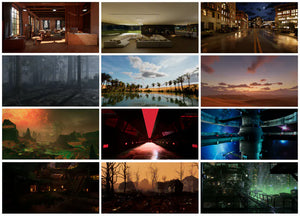
3. Virtual Set Templates
ARwall offers a wide library of:
-
3D virtual studio templates
-
Photorealistic locations
-
Modular set designs
This reduces asset creation costs and speeds up production.
4. Simplified Workflow for Filmmakers
Traditional virtual production requires:
-
Tracking hardware
-
Unreal Engine experts
-
Complex rigs
ARwall reduces this to:
-
A single workstation
-
Markerless tracking
-
Simple setup
-
Faster execution
This makes photorealistic virtual filmmaking possible for small teams.

Virtual Sets vs. Traditional Sets: Why Studios Are Switching
|
Feature |
Photorealistic Virtual Sets |
Traditional Physical Sets |
|
Cost |
Lower long-term |
Extremely high |
|
Lighting |
Real-time & dynamic |
Requires large lighting rigs |
|
Flexibility |
Unlimited locations |
Limited to physical builds |
|
Time |
Fast turnarounds |
Long construction cycles |
|
Environmental impact |
Low |
High material waste |
|
Realism |
Extremely high with LED |
High, but limited by budget |
Studios now prefer hybrid workflows: real props + virtual backgrounds.
Future of Photorealism in Virtual Sets
The next era will bring:
-
AI-enhanced texture generation
-
Real-time environment physics
-
Fully interactive volumetric sets
-
Holographic lighting systems
-
Mixed reality sets blending real props with AI-generated layers
Virtual film production will no longer complement filmmaking — it will become the standard pipeline.
FAQs
1. What is a photorealistic virtual set?
A photorealistic virtual set is a digitally created environment designed to look exactly like a real-world location. It features realistic lighting, textures, shadows, reflections, and depth to mimic live action environments.
2. How do virtual sets work in filmmaking?
Virtual sets work by combining real-time 3D engines, camera tracking, and either green screens or LED walls. As the camera moves, the digital background adjusts with perfect perspective, creating a realistic cinematic shot.
3. What is the price of a photorealistic virtual set?
Prices vary depending on complexity:
-
Virtual environment design: $2,000–$50,000+
-
LED stage rental: $5,000–$50,000 per day
-
Full permanent LED stage: $300,000–$1M+
4. What is a 3D virtual studio?
A 3D virtual studio is a digitally built environment used for filming or broadcasting. It includes realistic 3D sets, lighting, textures, and interactive camera tracking.
5. Are virtual sets better than green screens?
Virtual sets using LED walls provide superior realism because:
-
Lighting is real
-
Reflections are natural
-
Actors can see the environment
However, green screens are more budget-friendly.
6. What is ARwall and how does it help virtual studios?
ARwall is a leading virtual production company offering:
-
Markerless tracking
-
Real-time AR environments
-
LED volume solutions
-
Easy workflows
This dramatically improves photorealism and reduces production complexity.
7. Are photorealistic virtual sets used in Hollywood?
Yes. Films like The Mandalorian and many major productions rely on LED volume stages and photorealistic 3D environments to replace traditional sets.
8. Can I build a virtual studio for YouTube or streaming?
Absolutely. Affordable ARwall setups and green-screen-based 3D virtual studios allow content creators to create high-quality productions without Hollywood budgets.
Conclusion: Photorealism Is Redefining Virtual Filmmaking
Photorealism in virtual sets is no longer just a trend — it is the future of virtual filmmaking, advertising, broadcasting, and commercial productions.
With the power of:
-
3D virtual studios
-
LED volume stages
-
ARwall’s real-time ARFX tools
-
Real-time rendering engines
… filmmakers gain unprecedented freedom, speed, and realism.
Virtual sets allow filmmakers to bring any vision to life — whether it’s a futuristic city, a hyper-real office environment, or a far-off alien world.
Ready to Upgrade Your Film Production Workflow?
Want to build a photorealistic virtual set or learn how to integrate ARwall technologies?
👉 Contact us today for a free consultation.
👉 Explore our virtual production services to discover how we can help transform your filmmaking pipeline.