Immersive Theatre: A Complete Guide to the Future of Live Experiences

Immersive theatre is transforming how audiences experience storytelling. Instead of watching a performance from a fixed seat, viewers are invited inside the story. They walk, interact, explore, and sometimes even influence the narrative. As demand grows for deeper engagement—especially in entertainment, marketing, and experiential design—immersive theatre has become one of the fastest-rising creative movements worldwide.
This guide explores what immersive theatre is, how it works, why it’s so popular, and how new technologies like ARwall’s immersive solutions are pushing it into the future.
Immersive theatre is a form of live performance where the audience is not just observing but physically present within the world of the story. Unlike traditional theatre, where the fourth wall separates actors from viewers, immersive theatre breaks that barrier completely.
Core Characteristics of Immersive Theatre
-
Audience freedom: People move through different rooms, sets, or environments.
-
Interactive storytelling: Viewers can talk to actors or trigger story moments through actions.
-
Multi-sensory immersion: Lighting, projection, sound, scent, and physical objects create a 360° environment.
-
Nonlinear narrative: Different audiences may see different scenes depending on where they choose to go.
-
Intimate engagement: Some scenes are one-on-one or take place in small groups.
Immersive theatre is also widely used in marketing, education, training, and virtual production, where engagement and realism are essential.
To see how immersive spaces are used in corporate environments, check out:
👉 ARwall’s Immersive LED Displays for Corporate Training
Why Immersive Theatre Is So Popular
Immersive theatre resonates with modern audiences because it blends physical presence with the emotional power of narrative. People crave experiences—not just entertainment—and immersive theatre offers:
1. Personalized storytelling
Each person experiences the show differently. No two visits are the same.
2. Emotional depth
Being part of the world makes the story more intense and memorable.
3. Instagram-worthy visual moments
Highly designed spaces make immersive shows extremely shareable.
4. The rise of immersive entertainment culture
Escape rooms, VR experiences, interactive museums, and themed attractions have primed audiences for immersive theatre.
5. Tech-enabled realism
LED walls, AR, projection mapping, and virtual production tools create lifelike environments without building massive sets.
You can learn more about the rise of immersive tech here:
👉 ARwall’s Immersive Technology
Immersive Theatre Examples (Global & Iconic Productions)
Here are the most influential immersive theatre examples that shaped the genre:
1. Sleep No More — The Benchmark of Immersive Theatre
Perhaps the most famous immersive performance in the world, Sleep No More by Punchdrunk reimagines Macbeth inside a 100-room warehouse. Audiences roam freely, exploring hotel rooms, streets, bars, forests, and laboratories built indoors. Actors move among them—sometimes silently, sometimes pulling spectators into private scenes.
This show became synonymous with immersive theatre because of:
-
Nonlinear storytelling
-
Audience masks
-
Stunning set design
-
Highly choreographed movement
-
Freedom to choose your narrative
Because of Sleep No More, the search phrase “sleep no more immersive theatre” remains one of the most popular keywords today.
2. Then She Fell (New York)
A two-hour immersive journey inspired by Lewis Carroll’s Alice stories with one-on-one interactions, hidden rooms, and surreal scenes.
3. The Burnt City (London)
Punchdrunk’s futuristic sci-fi world blended with ancient mythology. It introduced new interactive approaches to large-scale immersive theatre.
4. Meow Wolf Exhibitions
Although museum-based, Meow Wolf productions mix immersive storytelling, art installations, and nonlinear exploration, making them a major influence on immersive theatre creators.
5. Virtual & Digital Immersive Theatre
Many modern shows use screens, holograms, VR, and LED-powered backdrops to create scenes without physical sets.
Here’s where ARwall becomes significant—its virtual production tools help storytellers build immersive environments without expensive physical construction.
Explore how ARwall enhances immersive experiences here:
👉 Immersive Marketing Services by ARwall

Immersive Theatre Experience: What It Feels Like for the Audience
The audience experience in immersive theatre is different from anything in traditional performance.
1. Freedom to Explore
Visitors walk around, open drawers, dig through letters, or step into hidden spaces. The show happens all around them.
2. Sensory Stimulation
Lighting, music, textures, temperatures, scents, and visual projections build a world that feels real.
3. Personal Interaction
Actors may:
-
Whisper lines directly to an audience member
-
Hand them a prop
-
Lead them to secret rooms
-
Give them special roles
This leaves a deep emotional impact.
4. Nonlinear Discovery
Like an open-world video game, the viewer’s decisions shape their path.
5. Hyper-realistic Environments
Thanks to technologies like:
-
LED walls
-
Projection mapping
-
AI-driven environments
-
Virtual production systems
…sets can transform instantly, creating cinematic moments live.
ARwall is a leader in virtual environments that effortlessly blend physical and digital worlds.
Learn how ARwall and Sony enable immersive learning:
👉 Unlocking Immersive Learning with ARwall x Sony
Immersive Theatre Companies Leading the Industry
Here are the major companies producing groundbreaking immersive theatre around the world:
1. Punchdrunk (UK)
Creators of Sleep No More and pioneers of 360° immersive storytelling.
2. Meow Wolf (US)
A hybrid mix of immersive art, interactive theatre, and themed entertainment.
3. Third Rail Projects (US)
Creators of Then She Fell and known for intimate, detailed productions.
4. Secret Cinema (UK)
Large-scale immersive experiences based on films like Star Wars, Blade Runner, and Casino Royale.
5. The Guild of Misrule (UK)
Known for immersive adaptations of The Great Gatsby and site-specific theater.
6. ARwall (US) — Tech-Driven Immersive Theatre Innovation
While not a traditional theatre company, ARwall collaborates with theatre creators, brands, and studios to build immersive spaces using:
-
Virtual production
-
LED walls
-
AR environments
-
Real-time interactive screens
ARwall makes immersive theatre more accessible by reducing set costs and increasing creative flexibility.
For companies creating immersive shows, ARwall’s immersive tech guide is essential:
👉 ARwall Immersive Technology Overview

How Technology Is Transforming Immersive Theatre
Modern immersive theatre is no longer limited to physical sets. Technology enhances realism, audience interaction, and storytelling possibilities.
1. LED Walls & Virtual Production
Immersive LED walls create dynamic backgrounds that change instantly.
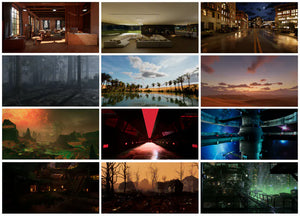
Instead of building 20 physical sets, creators can load digital environments, such as:
-
Forests
-
Castle interiors
-
City streets
-
Sci-fi landscapes
This reduces costs, time, and material waste while offering cinematic visuals.
This is exactly how ARwall’s LED systems revolutionize immersive storytelling.
2. Projection Mapping
Shapes buildings, rooms, and objects into living canvases.
3. Augmented Reality (AR)
Audience members use AR glasses or mobile devices to see digital layers blended with live actors.
4. Spatial Audio
Directional sound gives precise location cues—footsteps behind you, whispers to your right, music drifting from another room.
5. Motion Tracking
Tracks audience movement, triggering lighting or story events.
6. Artificial Intelligence
AI characters, environments, and responsive stories are becoming part of the immersive theatre toolkit.
To explore how companies use these tools in business, read:
👉 ARwall Immersive Marketing Services
Interactive vs Immersive Theatre: What’s the Difference?
Although people often confuse the two, interactive and immersive theatre are not the same. Both involve audience participation, but the depth of involvement differs significantly.
Interactive Theatre
In interactive theatre:
-
The audience participates in moments of the performance.
-
Viewers may make choices, answer questions, or join scenes.
-
Interaction is usually limited and guided.
-
The environment often remains a traditional stage or semi-traditional setup.
Example:
A comedy show where actors ask the audience to vote on what happens next.
Immersive Theatre
Immersive theatre is deeper and more experiential:
-
The audience is placed inside the world of the story.
-
They walk through rooms, interact freely, and explore nonlinear paths.
-
They may influence how the narrative unfolds.
-
Every audience member can have a completely unique journey.
Example:
In Sleep No More, guests wander through a 100-room building and choose which characters to follow.
The Key Difference
Interactive theatre engages you.
Immersive theatre surrounds you.
While interactive theatre invites moments of participation, immersive theatre transforms the entire environment into a living story.
Can Immersive Theatre Be Done at Home?
Absolutely—especially with today’s technology.
Immersive theatre doesn’t need a massive warehouse. Many creators and educators produce home-based immersive theatre experiences using:
-
Augmented reality (AR) apps
-
Projection mapping
-
LED screens
-
Live Zoom performances
-
Mixed reality headsets
-
Online interactive narrative games
-
Printed props or mailed story kits
Home immersive theatre grew especially popular during global lockdowns, inspiring hybrid storytelling that mixes digital and physical elements.
Today, brands and theatre makers also use virtual production tools to build immersive spaces directly inside:
-
Living rooms
-
Classrooms
-
Small studios
-
Corporate offices
This is where ARwall becomes incredibly valuable.
Their real-time virtual backgrounds and LED displays allow creators to build cinematic, immersive sets without leaving home or renting large spaces.
To explore immersive technology options suitable for home and studio use, check out:
👉 ARwall Immersive Technology Overview
How ARwall Enhances Immersive Theatre Productions
Immersive theatre is evolving, and ARwall sits at the center of that evolution. Their tools empower theatre makers, educators, brands, and creative studios to build immersive worlds efficiently and affordably.
Here are the top ways ARwall elevates immersive theatre:
1. Virtual Production Worlds Without Large Sets
Instead of constructing physical environments, creators can load digital worlds using ARwall’s tools:
-
360° immersive backdrops
-
Cinematic environments
-
Real-time interactive scenes
With LED walls and projection systems, any room becomes a fully realized world.
This is demonstrated in ARwall’s immersive LED use cases:
👉 Immersive LED Displays for Corporate Training
2. Real-Time Scene Changes
Traditional theatre relies on slow, physical set changes.
ARwall’s virtual production environments allow:
-
Instant transitions
-
Moving backgrounds
-
Weather and lighting effects
-
Real-time storytelling adjustments
This unlocks a new level of flexibility for immersive theatre companies.
3. Reducing Production Costs
Building dozens of sets is expensive. Virtual backgrounds dramatically cut costs while offering endless creative variety.
4. Enabling Educational Immersive Theatre
Schools, museums, training centers, and universities use ARwall’s solutions for:
-
Interactive storytelling
-
Immersive workshops
-
Virtual campus tours
-
Simulation-based learning
Read more about ARwall’s work with Sony in immersive learning:
👉 Unlocking Immersive Learning with ARwall x Sony

5. Enhancing Immersive Marketing & Brand Storytelling
Many brands use immersive theatre techniques in marketing campaigns.
ARwall supports:
-
Retail activations
-
Product launches
-
Experiential marketing
-
Branded story worlds
Learn how ARwall helps companies deliver immersive marketing:
👉 Immersive Marketing Services
Audience Experience in Immersive Theatre:
Audience experience is the heart of immersive theatre. Here’s how it differs from traditional performance:
1. Freedom to Choose Your Story Path
Visitors decide where to go, who to follow, and what clues to uncover.
2. Emotional Intimacy
Actors often speak directly to individual audience members, creating moments that feel private and meaningful.
3. Discovery-Based Engagement
Instead of being told the story, participants discover it through exploration.
4. Physical Interaction with the Environment
Audiences open drawers, flip through books, handle props, or move through entirely different worlds.
5. Heightened Realism
The combination of physical sets + digital layers makes the world feel real.
6. Multi-Sensory Storytelling
Immersive theatre activates all senses:
-
Visual
-
Auditory
-
Tactile
-
Spatial
-
Sometimes scent or temperature
This intensity is what makes the experience unforgettable.
Immersive Theatre News and Trends in 2025
The immersive theatre landscape continues evolving rapidly. Here are key trends shaping 2025 and beyond:
1. Integration of AR & Virtual Production
ARwall’s work signals a growing shift:
Theatre experiences are merging with film-style digital environments.
2. Gamified Storytelling
Immersive theatre often borrows from video games:
-
Nonlinear paths
-
Hidden quests
-
Character choices
3. Hybrid Digital-Physical Experiences
Shows blend live performance with digital overlays.
4. AI-Driven Characters
Some productions now use AI to respond dynamically to audience actions.
5. Corporate & Educational Adoption
Companies use immersive theatre techniques for:
-
Training
-
Brand storytelling
-
Safety simulations
-
Soft skills development
6. Micro-Immersive Experiences
Small-scale shows in:
-
Homes
-
Apartments
-
Classrooms
-
Small studios
This approach makes immersive theatre more accessible.
FAQs: Immersive Theatre
1. Why is immersive theatre so popular?
Because modern audiences want experiences, not passive entertainment. Immersive theatre allows people to explore, interact, and feel part of the story.
2. Who created immersive theatre?
While influences come from interactive art and experimental theatre, Punchdrunk is credited with popularizing modern immersive theatre with shows like Sleep No More.
3. What is the difference between interactive and immersive theatre?
Interactive theatre invites participation.
Immersive theatre surrounds the audience entirely and gives them agency to move and explore.
4. What technology is used in immersive theatre?
Common technologies include:
-
LED walls
-
Virtual production
-
Projection mapping
-
AR and VR systems
-
Spatial audio
-
Motion tracking
-
AI-driven storytelling
Learn more here:
👉 ARwall Immersive Technology
5. Can immersive theatre be done at home?
Yes. With AR, projection, and VR tools, creators are designing small-scale immersive theatre shows for personal spaces.
The Future of Immersive Theatre Is Hybrid, Technological & Audience-Driven
Immersive theatre has grown into one of the most exciting forms of storytelling today. From Sleep No More to AI-enhanced environments, it empowers audiences to become part of the narrative — not just observers.
And with the rise of virtual production, LED environments, and AR technology, companies like ARwall are expanding what’s possible, making immersive theatre more accessible, scalable, and visually stunning than ever before.
Whether you’re a theatre creator, marketer, educator, or brand strategist, the potential of immersive theatre is enormous — and evolving rapidly.
Ready to elevate your storytelling or build your own immersive experience?
👉 Explore immersive storytelling tools: ARwall Immersive Technology
👉 Design immersive brand experiences: ARwall Immersive Marketing Services
👉 Discover immersive LED solutions: Immersive LED Displays for Training
👉 Learn how ARwall collaborates in education: ARwall x Sony Immersive Learning